I will show you how you can root your Lenovo A1000 (G or T or F :) ) in a simplified way(i.e. One click Root).
Showing posts with label Technology. Show all posts
Showing posts with label Technology. Show all posts
Tuesday, 7 April 2015
Tuesday, 14 October 2014
Nearly 7 Million Dropbox Passwords Have Been Hacked, But Dropbox says it was never hacked!

Nearly 7 million Dropbox usernames and passwords have been hacked, apparently from third-party apps that users allowed to access their accounts.
The Next Web was the first to notice the leak on a site called Pastebin, where hackers have already leaked about 400 accounts. The hackers promise to release more accounts in return for Bitcoin donations. The hackers claim to have over 6.9 million email addresses and passwords belonging to Dropbox users.
In a statement to The Next Web, Dropbox denied it was hacked:
Dropbox has not been hacked. These usernames and passwords were unfortunately stolen from other services and used in attempts to log in to Dropbox accounts. We'd previously detected these attacks and the vast majority of the passwords posted have been expired for some time now. All other remaining passwords have expired as well.
It's a similar response to the one Snapchat had when hackers were able to obtain about 100,000 photos from the service through a third-party app. Snapchat claimed its servers weren't hacked, but the servers of a third-party app designed to save Snapchat photos.
The real problem in both cases appears to be the way popular services allow third-party apps to use their platform. Even though Dropbox's own servers weren't hacked, the service still allows third-parties access, which has become the target for hackers to obtain personal information.

Dropbox is sending affected users emails encouraging them to reset their passwords, The Next Web reports.
This is an alarming trend. Services like Dropbox, Snapchat, and Apple have pushed blame on users and other third parties following recent hacks when it's clear they're not doing enough to scrutinize the kinds of apps that have access to their platforms.
Courtesy: Business Insider
Liked us? Like and Follow here:
More than 1 Million users signed-up for Microsoft's Windows 10 Preview

Microsoft released its first Windows 10 Technical Preview at the beginning of October, and the company is now revealing that 1 million people are helping test the upcoming operating system through the Windows Insider Program. "That equates to a lot of people using the Windows 10 Technical Preview and sending us feedback," says Microsoft's Joe Belfiore. The software maker has received more than 200,000 pieces of feedback on the early version of Windows 10, with top requests that include options to remove the new search and task view buttons, as well as requests for a Start Menu animation or transition.
According to Belfiore, 64 percent of all Windows 10 Technical preview installs are on actual PCs rather than virtual machines. "This makes us confident that a lot of the feedback is based on 'medium-term' use and not just a few minutes of experimentation," explains Belfiore. 68 percent of all Windows 10 users are launching more than 7 apps per day, and 25 percent of all users are launching more than 26 apps per day so it's clear people are using this Technical Preview on their regular devices.
It's not yet clear when Microsoft plans to release a new Windows 10 Technical Preview build, but one is "coming soon" according to Belfiore, and the company is clearly working towards acting on some of the early feedback. "Even though we’re just two weeks into this huge collaborative project, we’re learning a lot and we’re working hard to keep up with your enthusiasm and passion," says Belfiore. Those 200,000 pieces of feedback will undoubtedly shape Windows 10 in interesting ways, and Microsoft is planning to release regular updates as the company moves towards a final version next year.
Courtesy: The Verge
Liked us? Like and Follow here:
Wednesday, 10 September 2014
New launch: iPhone 6 Plus with 5.5 inch 1080p Retina HD Display
The wait is finally over - Apple CEO Tim Cook just officially revealed the hefty new iPhone 6 Plus and its 5.5-inch screen in Cupertino alongside a long-rumored (and handier) 4.7-inch model. This thing won't seem all that foreign if you frequent the geekier corners of the web, but it's a sure sign that Apple wants to give all those other pocket-stretching phablets out there a run for their metaphorical money. The company's live press event is still chugging along (with a sketchy stream, no less), but here's what we know so far.
There are no two ways about it: The star of the show here is the spacious 5.5-inch 1080p Retina HD display riding up front -- to hear Apple's Phil Schiller tell it, it's sRGB-accurate, has an ultrathin backlight, photo-aligned IPS liquid crystals, an improved polarizer and ion-strengthened glass. More importantly (and at long last!), the screen runs at 1080p.
You won't notice any dramatic design differences between this model and its little brother -- it's still dramatically thinner than the iPhones that came before it (the Plus comes in at7.1mm thick), and the angular edges of the 5s have given way to a smoother, rounder look in line with the company's most recent batch of iPads. Remember all those leaks? They absolutely nailed it, and the end result looks, well, really comfortable to latch onto.
But what of the tech powering the show? Let's look at Apple's snappy new 64-bit A8 chipset. Schiller says it's 50 percent more energy efficient (not to mention a hair smaller) than the A7 that graced earlier models, and about25 percent more powerful to boot. A new M8 coprocessor should also help keep better track of your activity levels, since it can hazard guesses at distance traveled and measure elevation changes for you avid stair-climbers. And speaking of power, you'll be able to squeeze 16 days of standby time out of the 6 Plus, 14 hours of continual video playback and or a full 24 hours of 3G talk time out of the non-removable battery.
Mobile photographers (which is really everyone these days, right?) may be a little bummed to see that the 6 Plus has an8-megapixel iSight camera and an f/2.2 aperture lens paired with the same True Tone flash as in the 5s. That's not to say that Apple's been slacking -- it's got phase-detecting autofocus (we've seen similar tech in SLRs), improved face detection and a new Best Shot mode. Extra bonus for Plus owners: you get optical image stabilization, so you can lord your crisper shots over everyone else when it launches. You'll be able to shoot 1080p video at either 30 or 60 frames per second, and slow-motion video has gotten even slower: think a whopping 240 frames-per-second mode. The front-facing camera has been updated with a sensor that's even greedier for photons, perfect for all those well-lit "LOOK I HAVE A NEW IPHONE" selfies you'll probably snap.
Apple's iOS 8 got the grand launch back at WWDC, but (to no one's surprise) it packs a few extra features to help it feel more at home on bigger screens. Perhaps the biggest is the inclusion of a two-paned landscape mode, which makes the whole thing feel a little more like a tiny iPad than an upscaled iPhone. If you use the Touch ID button (yeah, you're not escaping those sensors), you'll also invoke a one-handed mode that moves everything down to the lower half of the display for easy access
There's a decent chance that if you're reading this, you're already clamoring for a 6 Plus of your very own. Curiously, Apple has done away with the 32GB model entirely and added a 128GB model to the mix too in case you've got a few decades of movies that need to go with you everywhere. The 6 Plus will cost $299, $399 and $499 for the 16GB, 64GB and 128GB models, respectively, with your usual two-year contract. You'd better start saving up, too:Preorders start on September 12 and it'll start shipping in "several countries" on the 19th. Take that, oft-repeated rumors of a protracted launch!
Endgadget
Thanks,
Keep reading..


Xiaomi Redmi 1S | Motorola Moto E | Asus Zenfone 4: Top budget smartphones' Face-off
Earlier in the week, Xiaomi announced to release the much-awaited budget smartphone Redmi 1S in India on 2 September.
Considering the Redmi 1S' feature-rich specifications and its dirt-cheap price-tag, the Xiaomi phone in all probability will stir up a huge storm in the Indian budget smartphone just like its sibling Mi3 did in the mid-range segment.
Redmi 1S will give a stiff competition to two popular MNC brands Motorola Moto E and the newly introduced Asus Zenfone 4.
All the three handsets are worth more than their price compared to other devices in the market, considering that they get the latest OS updates, water-proof display and other value-added features, which you don't normally find in an entry-level smartphone.
This is an exciting time in the Indian smartphone market, where all brands (both MNCs and domestic) are flooding market with feature-rich devices. Indian consumers will be spoilt for choices to buy smartphone this holiday season.
Here is a brief description of the key specifications of the three popular smartphones - Xiaomi Redmi 1S, Motorola Moto E and Asus Zenfone 4.
Display and Design:
First up, Xiaomi Redmi 1S; It sports a candy bar rectangular design with curved corners and flaunts a 4.7-inch HD screen with pixel density of 312 ppi, highest in its class (entry-level smartphones).
On the other hand, Motorola Moto E is no less of a competitor; it flaunts a 4.3-inch qHD (960x540p) screen with Corning Gorilla Glass 3 scratch-resistant shield and has a pixel density of 256 ppi. It also boasts of splash-resistant screen/body enabling users to take/answer calls even in rain. No other smartphone under this price-range offers this feature.
Asus Zenfone 4 sports a 4.5-inch FWVGA (480x854p) resolution screen having Gorilla Glass 3 shield and pixel density of 218 ppi.
Processor, Storage and RAM:
In this aspect, Xiaomi Redmi 1S once again, comes on top, thanks to Qualcomm's faster 1.6GHz Snapdragon 400 series CPU. It is aptly backed by 1GB RAM and 8GB inbuilt memory (expandable up to 6GB).
Motorola phone too houses a Qualcomm Snapdragon 400 series processor, but the CPU consists of just two cores with maximum clock-rate is limited to just 1.2GHz. It comes packed with 1GB RAM and 4GB inbuilt memory (expandable up to 32GB).
Asus Zenfone 4 too ships with similar 1.2GHz dual-core processor, but it is made by Intel Corp. The company compensates this short coming with the sumptuous physical memory - 1GB RAM and 8GB storage space (expandable up to 64GB)
[Note: More the cores in the CPU, more smoothly the smartphone works]
Mobile Operating System:
In this aspect, all three phones almost stand even as they run on the ubiquitous Android platform, but Moto E owners will have slight advantage over the two competitors thanks to near stock Android OS. It also runs on the latest v4.4.4 KitKat OS.
On the other hand, Xiaomi Mi3 ships with v4.3 Jelly Bean with custom MIUI, whereas the Asus Zenfone is powered by Android 4.4.2 KitKat OS.
Camera:
Specification wise, Asus Zenfone 4 (A450CG) comes on top. It boasts 8.0-megapixel camera on the rear side and a 0.3-megapixel snapper on the front. To enhance photography experience, company has incorporated proprietary PixelMaster camera technology with features including Selfie Mode and Depth of Field Mode, Low Light Mode and Time Rewind.
Xiaomi too ships with 8.0-megapixe camera and a 1.3-megapixel front camera.
On the other hand, Motorola loses this battle as it comes with less superior 5.0-megapixel camera with no LED flash and neither a front-camera.
[Note: More mega-pixel count in the camera does not guarantee a good quality photograph. It all depends on the type of the lens, size and aperture.]
Price:
Price is one of the most important aspects of this comparison article as it plays a crucial role in the minds of the price-sensitive middle class and the aspiring youth population, which form the biggest chunk of the India's demography.
When Motorola Moto E set foot in India for ₹6,999, couple of months ago, it started a price-war among domestic and MNC brands and now Xiaomi has taken a notch up (read down), by keeping a ridiculous price-tag of ₹5,999 for the feature-rich Redmi 1S.
Asus Zenfone 4 (A450CG) is priced ₹6,999, if interested, consumers can also go for A400CG model, which costs ₹5,999. Only difference between two is their display size and camera specifications.
Verdict:
All in all, the Xiaomi seems to weigh in better than its two counterparts, mainly from a hardware point of view, its on-board memory, battery power, camera, PPI and screen resolution. The OS however, may be a deciding factor for many users.
Thanks,
Keep reading.. We write, because you read.

Tuesday, 26 August 2014
After becoming a success in the market, Moto G to say goodbye!
Online retail major Flipkart has announced its plan to stop selling Moto G smartphone in the country.
At present only the 16GB version of MotoG is available in India, and Motorola and Flipkart will not replenish the inventory once the smartphone's stock runs out, according to a statement posted by the online company on its website. The 8GB model went out of stock soon after Motorola cut the prices of both variants of Moto G by Rs 2,000 in July, and it now appears that more units may not be on their way.
With 16GB variant of Moto G permanently going out of stock, it virtually means the end of Moto G's run in India. As, Flipkart is the exclusive seller for the smartphone range in the country.
Launched in India in early March this year, Moto G is credited of bringing a major change in the country's smartphone market. The smartphone offered a quality display, snappy performance, day-long battery life and the latest version of Android at a starting price of Rs 12,499. However, it was criticized for its low-resolution camera and no storage expansion.
Moto G's attractive pricing helped it crack the sub-Rs 15,000 market, which was dominated by indigenous brands like Micromax, Karbonn and Lava. This dip in the low-end segment of the market proved fruitful for Motorola, with buyers' rush to purchase Moto G crashing Flipkart website. In fact, for nearly a month, Motorola struggled to meet the demand for Moto G in India.
Both Moto G and Moto E helped Motorola score sales of one million units within five months of its re-entry.
However, lately Moto G has been facing tough competition from two new entrants in the Indian smartphone market: Xiaomi Mi 3 and Asus Zenfone 5. The Xiaomi phone offers much better hardware than Moto G at the same price as its 16GB unit. ZenFone 5 offers similar hardware, but has a higher resolution camera, sports a bigger screen and allows storage expansion via microSD cards.
On its part, Motorola is said to be already working on a Moto G successor. The company is hosting an event in New Delhi on September 5, where it is expected to showcase Moto G2, which is said to have upgrades like 5-inch screen and 8MP camera, while the remaining features are reported to be same as that of Moto G.
Motorola is also expected to launch Moto 360 smartwatch and Moto X smartphone's successor at the event.

Monday, 28 July 2014
Japan has put "selfie stands" at popular destinations
The selfie has come out of nowhere like a narcissistic whirlwind and become one of the most popular things we can do with our smartphones.
Don't believe us? Sony has gone so far as to release a handset dedicated to taking selfies. And now, over in Japan there are even dedicated selfie stands at popular locations allowing you to snap yourself for social media bragging rights.
The stands feature a special slot where you can keep your smartphone secured for the duration of the selfie and are expertly positioned to take in the majesty of the surrounding scenery.
It's also an excellent hangout spot for snatch-and-run thieves, but that's probably just us being cynical.
We've not heard any news regarding UK-specific selfie stands but who knows, this could be the future of holiday photography.

Tuesday, 8 July 2014
Newly revealed details show how Microsoft plans to steal you away from iOS and Android
Is there anything that Microsoft can do at this point to create a substantially larger user base for Windows Phone? At this point things don't look great, but we wouldn't completely count Microsoft out just yet. Neowin's sources say that Microsoft is working on two new smartphones that will both have the most intriguing Windows Phone feature we've heard about so far: 3D Touch.
For those who need a refresher, 3D Touch is a new feature that will take advantage of Microsoft's Kinect technology to make your phone much more responsive to gestures and placements than any other phone now on the market. So for instance, 3D Touch will let you answer your phone just by holding it up to your ear and to turn on speaker phone just by placing your phone down on the table when you're on a call with someone. You'll also apparently be able to end your call by putting your phone into your pocket, as Kinect will be able to automatically tell what you'd like to do based on lighting and positioning.
Neowin says that the first device is a phone codenamed “McLaren” that will release by the end of the year and that will feature a 5.2-inch 1080p display with a 20-megapixel camera and 64GB of storage. The second device will be a massive 6-inch phablet that's on par with the gigantic Lumia 1520 and that may release by the end of the year.
The key in all this is whether Microsoft can show us why 3D Touch is a big differentiator from other smartphones — otherwise, it's likely to be seen as a Samsung-style gimmick that looks cool at first but is never really used.
Source: BGR

Tuesday, 1 July 2014
Social Site Orkut to Close down after 10 years on September, 2014

Google's Social media platform Orkut is going to shut down on 30th of September this year. Orkut wrote on its blog about its dissolution yesterday.
Orkut, Google's first social
networking site, will cease to exist after
September, with the Internet giant deciding
to shut down the service launched 10 years
ago.
Google said it will shut down Orkut, which is
very popular in India and Brazil, on
September 30. The service, however, did not
do so well in other parts of the world and lost
sheen to rivals like Facebook.
Orkut, which popularised posts or "scraps"
between friends, did not disclose the number
of users on the website.
However, according to its website about
50.6 per cent of its users were from Brazil.
Another 20.44 per cent came from India,
while the US and Pakistan accounted for
17.78 per cent and 0.86 per cent,
respectively.
"Over the past decade, YouTube, Blogger
and Google+ have taken off, with
communities springing up in every corner of
the world. Because the growth of these
communities has outpaced Orkut's growth,
we've decided to bid Orkut farewell," Google
said in a post on the Orkut blog.
Orkut was launched in 2004, the same year
when Facebook was founded. Facebook is now the world's largest social network with 1.28
billion users.
Orkut was the result of a "20 per cent project" in which Google workers got to spend a fifth of
their time on ideas not necessarily related to their job responsibilities.
source: ET
source: http://en.blog.orkut.com/2014/06/tchau-orkut.html
Liked us? Like and Follow here:
Wednesday, 21 May 2014
China Bans Microsoft Windows 8 for Government Computers
While US government is always prohibiting the purchase of Huawei products due to suspected backdoors from the Chinese government, China also keep itself totally apart from the US productions.
China is a bit famous for using its own operating systems, smartphone application services and lots more, rather than using the US developed Operating Systems, and now China has reportedly banned the installation of Microsoft Corporation’s latest operating system, Windows 8 on any of its government computers.
The Central Government Procurement Center issued a notice that was posted on its website last week prohibiting the use of Microsoft's latest operating system and the reason behind it is to support the use of energy-saving products, the report said.
But the state news agency ‘Xinhua’ pointed out a different reason for the ban saying the country wants to avoid any further losing of the support for an operating system like it did recently by pulling out its support from the oldest operating system Windows XP, which was widely used in China and is still estimated to be used on as much as half of the Chinese desktop market, the Chinese news agency claimed.
In the beginning of last month, Microsoft stopped providing the support for its longest running and most successful 13 year old Operating system, Windows XP, despite the fact that it has been used widely across the world than any other OS.
According to China's Central Government Procurement Center, all the desktops, laptops, and tablets used by central state agencies must run on an OS other than Windows 8. "All computer products are not allowed to install the Windows 8 operating system," reads the post on the center's website.
The ban applies only to the government offices, however the market of personal computers remains unaffected. Till now, Microsoft didn’t respond to comment on the issue.
Keep reading..
We write because you read :)

Tuesday, 20 May 2014
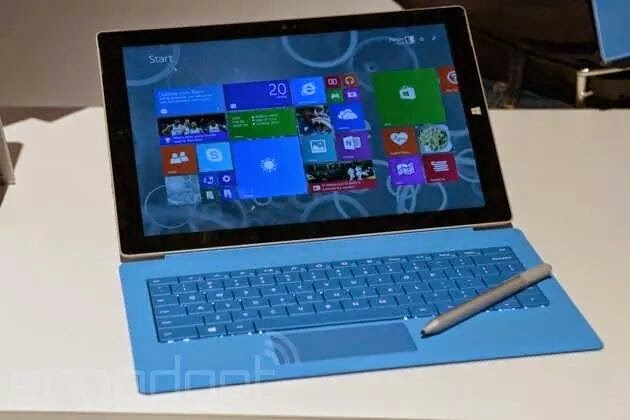
Microsoft Unveils 12-Inch Surface Pro 3
Software giant Microsoft unveiled its latest attempt to combine the power of a notebook computer with a tablet, the Surface Pro 3, at an event in New York.
Sporting a 12-inch display, it’s not the mini version that has been the subject of rumors. But the company says at 9.1 millimeters thick and 800 grams, it’s the thinnest and lightest of its kind. It also sports an Intel Core I7 processor.
Prices start at $799 and will be available for pre-order on May 21 and in stores on June 20.
Microsoft CEO Satya Nadella called it a major step in what he termed “the journey toward combining the capabilities of the company.”
Panos Panay, Microsoft’s vice president for Surface computing, said that 96 percent of people who have an iPad also have a notebook, creating for users a level of complexity. The new device, he said, is focused on “taking that conflict away.”
Patrick Moorhead, head of the research firm Moor Insights and Strategy, described it as a “flanking maneuver” for Microsoft versus Apple’s iPad.
“Microsoft is clearly focused on the ultimate productivity device, not focused on purely content consumption,” he said. “While Microsoft has not yet hit the high volume seven-to-eight inch tablet segment, Microsoft is clearly steering away from a straight-on confrontation with Apple.”
Panay spent a lot of time in his presentation playing up the combination of the Surface Pro 3’s capabilities. Adobe has created a version of its Photoshop photo-editing software that is optimized for running on the Surface. But Panay also demonstrated an app designed to emulate the New York Times crossword puzzle that allows users to do the puzzle with a digital pen.
Keep Reading..
We write because you read :)

Sunday, 20 April 2014
Lava Iris 406Q: A cool smartphone with 4.4 KitKat at 7k Price

Power that outperforms
The new Lava iris 406Q comes with a snappy 1.2 GHz Qualcomm Snapdragon Processor with Adreno 302 Graphics Unit supported by a capacious 1 GB RAM + 4 GB ROM with 32 GB Expandable Memory which gives the power to outperform. The Quad core processor is designed to give you an unparalleled and rich gaming experience like never before.
Technology that outperforms
Operating on Android v4.3 Jelly Bean OS, this smartphone packs a more polished user-interface, fantastic performance, faster multi-tasking and an enormous list of features. Now get a guaranteed upgrade to Android v4.4 Kitkat over the air for a holistic immersive experience that will surely leave you spell bound.
Camera that outperforms
First day at college, your daughter’s first tooth, your best friend’s wedding or simply a vibrant flower at the near-by park. We understand the importance of memories. And that’s why we have armed the new Lava Iris 406Q smartphone with a powerful 5MP camera with image editor, which keeps you ready to capture the choicest moments at all times. So go ahead and create memories like never before.
The new Lava iris 406Q comes with a snappy 1.2 GHz Qualcomm Snapdragon Processor with Adreno 302 Graphics Unit supported by a capacious 1 GB RAM + 4 GB ROM with 32 GB Expandable Memory which gives the power to outperform. The Quad core processor is designed to give you an unparalleled and rich gaming experience like never before.
First day at college, your daughter’s first tooth, your best friend’s wedding or simply a vibrant flower at the near-by park. We understand the importance of memories. And that’s why we have armed the new Lava Iris 406Q smartphone with a powerful 5MP camera with image editor, which keeps you ready to capture the choicest moments at all times. So go ahead and create memories like never before.
- 1700mAhLi-Ion Battery
- 1.2GhzQuadcore processor
- 1GBRAM
- v4.3Android JB

Watch it on Flipkart. Click Here.
Liked us? Like and Follow here:
Attention! Malware stealing information from Jailbreaked iOS

A new piece of malicious malware infection targeting jailbroken Apple iOS devices in an attempt to steal users’ credentials, has been discovered by Reddit users.
The Reddit Jailbreak community discovered the malicious infection dubbed as ‘Unflod Baby Panda’, on some jailbroken Apple iOS devices on Thursday while a user noticed an unusual activity that the file was causing apps such as Snapchat and Google Hangouts to crash constantly on his jailbroken iPhone.
Tuesday, 15 April 2014
Heartbleed Bug - Explained with 10 FAQs

Heartbleed – I think now it’s not a new name for you, as every informational website, Media and Security researchers are talking about probably the biggest Internet vulnerability in recent history. It is a critical bug in the OpenSSL's implementation of the TLS/DTLS heartbeat extension that allows attackers to read portions of the affected server’s memory, potentially revealing users data, that the server did not intend to reveal.
After the story broke online, websites around the world flooded with the heartbleed articles, explaining how it works, how to protect, and exactly what it is. Yet many didn’t get it right. So based on the queries of Internet users, we answered some frequently asked questions about the bug.
After the story broke online, websites around the world flooded with the heartbleed articles, explaining how it works, how to protect, and exactly what it is. Yet many didn’t get it right. So based on the queries of Internet users, we answered some frequently asked questions about the bug.
Friday, 4 April 2014
Top 10 Paid Photography Apps for Android You Should Try..
Photo Mate Professional:

There are so Many Photo Editing and capturing apps But we have placed this on Number One because it is best seller Application in Android app store because of its cool features which makes it stand out of crowd. You can edit photos with xpm-sidefiles support.
Batch-Converting, Editing, renaming on bunch of images became so easy with this application, you can also share images to popular social media networks in a single click. There are other dozens of features in this application.
This application costs $6.25 from Google Play Store. you can buy and download or just view details of this application at This Link.
Night Camera +:

Every one who captures a Photo with a Mobile Phone and posts it on Social networking sites writes:”Quality is bad, because it is a phone camera”. Even mobile phone devices are coming with high resolution camera and higher megapixels.
Main problem which occurs is “Light Source”, if you take photos with your mobile phone in daylight you may be satisfied with result but main problem comes in night or indoor conditions where light is not sufficient. Here is the solution of this problem.
This app is amazingly designed for taking pics in low light conditions with Advanced Low Light Technique. This Application costs $0.99 and it is really worth it. View More information or Buy this Application fromThis link
360 Panorama:

Fed up with occasions which have more people and small range of camera? Now Solution is Here, 360 Panorama is an Application for Android devices which turns your android phone to full featured 360 degree panoramic camera.
You can easily take 360 Degree panoramas everywhere. This amazing app provides you with free space for panoramas online, it also allows you to share panoramas with your friends on popular social networks like Facebook, Twitter, etc.
This Application costs you very small price of $0.99. Buy and download or view more details for this application here at this Link.
Cartoon Camera Pro:

I still remember when I was searching for Android apps whether paid or free for giving cartoon and sketching effects to my Pictures and I rarely found one. But this application is awesome for cartoon effects in Pictures.
It includes 12 different effects you can se on your pictures. This app costs $1.24 from Google Play Store but there is also a free version of it available with advertisements on Google Play store.
Buy and Download This App or view more details from This Link.
Add Watermark:

You know that feeling that when you share photos on Social media networks captured by you and someone just copies it and shares that picture as it is his own. Now it is very difficult to do that because of Add Watermark App for Android.
This app adds a Customized Water mark, Your signature, picture, etc to the photo you captured. There are several features available in this Android application, for example: alignment, rotation, transparency, etc. This helps you to brand your creations.
This application is also available in free version but there are some limitations in free version. Buy and Download this application from This Link.
Camera WiFi LiveStream:

This is another awesome application for photographers who want to capture something which cannot be captured with their existence like Wildlife Photography, etc.
This application allows you to place your smartphone at one place and access its camera and all of its functionality from a Browser through WiFi network. So that you can easily spy on someone without letting him know that you are watching him.
This application also have a free demo so that you can check that it is perfect application for your Android Phone. This Costs $0.85 from Google Play Store. Buy and Download or View More details at this link.
Camera ZOOM FX pro:

This is another Awesome Application for users who want better and fast results from their Mobile Phone Cameras. this application enables up to 6X zoom. It is fastest camera on android, i.e: it can take upto 10 shots per second with Instant effects.
It allows you to apply different type of filters and also live previews for some of its filters. It also allows to fully customize hardware buttons, like volume buttons for zoom-in and zoom-out, etc.
This Android App costs $2.57 at Google Play Store, Buy and download or view details of This application through this link.
Paper Camera:

This is another awesome app through which you can watch the world with new eye of cartoon version. this app enables camera to capture the world with cartoon effect and Painting effects.
You will really have fun watching your home and world with whole different eye. This application costs $1.71 and you can buy and download or view more details here through this link.
Adobe® Photoshop® Touch:

This is just an incredible app designed for tablets by Adobe Systems and it have nearly all features of Adobe Photoshop like layers, selections, adjustments etc.
This is exclusive application from Adobe Systems and is available on Google Play store for $9.99 . Buy and download this app or read more about it here Through this link.
PicSay Pro – Photo Editor:

This is an award winning app through which you can remove red-eye, sharpen, Distort, crop, etc using your smartphone. This app can handle upto 13MP high resolution pictures with the devices which supports them.
This application costs $3.74 from Google Play Store. buy and Download this app or get more detail through this link.
Keep Reading.. :-)
we write because you read..
Monday, 24 February 2014
Nokia X, Nokia X+ and Nokia XL dual-SIM Android-based smartphones launched
Nokia has announced its first-ever smartphones based on the Android Open Source Project (AOSP), that can run Android apps and are powered by Microsoft and Nokia services.
Nokia X and Nokia X+ are dual-SIM phones that come with 4-inch 480x800 displays and are powered by 1GHz dual-core Qualcomm Snapdragon S4 processor. Both have identical 4GB internal storage, with expandable support up to 32GB via microSD card, and are powered by a 1500mAh battery. While the Nokia X comes with 512MB RAM, the Nokia X+ comes with 768MB RAM. Both phones have a 3-megapixel rear camera, but no front shooter. They are powered by a 1500mAh battery.
Nokia XL comes with a 5-inch 480x800 display, a 5-megapixel camera, a 720p front camera, 768MB RAM and a 2000mAh battery, while sharing other specifications with its younger siblings.
All three phones come with 3G support and take Micro-SIMs instead of regular ones.
The Nokia X will go on sale immediately, starting at EUR 89 (approximately Rs. 7,500 not including duties and taxes) in Asia-Pacific, Europe, India, Latin America, the Middle East and Africa. The Nokia X+ and Nokia XL are expected to roll out in these markets starting early second quarter, priced at EUR 99 (approximately Rs. 8,400 not including duties and taxes) and EUR 109 (approximately Rs. 9,300 not including duties and taxes), respectively.
The highlight of the three devices of course is the highly customised version of Android, with its Metro-inspired UI and access to Nokia's own store. While there's no access to Google's Play Store, users can side-load Android apps from any third-party source. Nokia has used AOSP corresponding to Android 4.1 Jelly Bean as the baseline for its operating system.
All devices come with free access to Here Maps, with offline maps and integrated turn-by-turn navigation, and Nokia MixRadio for free music streaming and downloadable playlists. All devices are also pre-loaded with a variety of third-party apps and games.
Nokia X, Nokia X+ and Nokia XL come with free cloud storage from Microsoft's OneDrive (earlier called SkyDrive). With the purchase of any Nokia X family smartphone in select markets, people will get one month of Skype's Unlimited World Subscription for a limited time.
Both the Nokia X and Nokia X+ will be available in bright green, bright red, cyan, yellow, black and white. The Nokia XL will be available in bright green, orange, cyan, yellow, black and white. Colour availability may vary across regions.
Courtesy: NDTV Gadgets
For more specifications visit
http://www.nokia.com/global/products/phone/nokia-x/specifications/
Thank you for reading..
We write because You read :-)


Wednesday, 25 December 2013
Say No To Cyber Bullying..

What is Cyberbullying?
Examples of cyberbullying include mean text messages or emails, rumors sent by email or posted on social networking sites, and embarrassing pictures, videos, websites, or fake profiles.
Kids who are being cyberbullied are often bullied in person as well. Additionally, kids who are cyberbullied have a harder time getting away from the behavior.
Cyberbullying can happen 24 hours a day, 7 days a week, and reach a kid even when he or she is alone. It can happen any time of the day or night.
Cyberbullying messages and images can be posted anonymously and distributed quickly to a very wide audience. It can be difficult and sometimes impossible to trace the source.
Deleting inappropriate or harassing messages, texts, and pictures is extremely difficult after they have been posted or sent.
Effects of Cyberbullying

Cell phones and computers themselves are not to blame for cyberbullying. Social media sites can be used for positive activities, like connecting kids with friends and family, helping students with school, and for entertainment. But these tools can also be used to hurt other people. Whether done in person or through technology, the effects of bullying are similar.
Kids who are cyberbullied are more likely to:
Kids who are cyberbullied are more likely to:
- Use alcohol and drugs
- Skip school
- Experience in-person bullying
- Be unwilling to attend school
- Receive poor grades
- Have lower self-esteem
- Have more health problems
Frequency of Cyberbullying

The 2008–2009 School Crime Supplement (National Center for Education Statistics and Bureau of Justice Statistics) indicates that 6% of students in grades 6–12 experienced cyberbullying.
The 2011 Youth Risk Behavior Surveillance Survey finds that 16% of high school students (grades 9-12) were electronically bullied in the past year.
Research on cyberbullying is growing. However, because kids’ technology use changes rapidly, it is difficult to design surveys that accurately capture trends.
Report Cyberbullying

When cyberbullying happens, it is important to document and report the behavior so it can be addressed.
Steps to Take Immediately
- Don’t respond to and don’t forward cyberbullying messages.
- Keep evidence of cyberbullying. Record the dates, times, and descriptions of instances when cyberbullying has occurred. Save and print screenshots, emails, and text messages. Use this evidence to report cyberbullying to web and cell phone service providers.
- Block the person who is cyberbullying.
Report Cyberbullying to Online Service Providers
- Cyberbullying often violates the terms of service established by social media sites and internet service providers.
- Review their terms and conditions or rights and responsibilities sections. These describe content that is or is not appropriate.
- Visit social media safety centers to learn how to block users and change settings to control who can contact you.
- Report cyberbullying to the social media site so they can take action against users abusing the terms of service.
When cyberbullying involves these activities it is considered a crime and should be reported to law enforcement:
- Threats of violence
- Taking a photo or video of someone in a place where he or she would expect privacy
- Stalking and hate crimes
Some states consider other forms of cyberbullying criminal. Consult your state’s laws and law enforcement for additional guidance.
Report Cyberbullying to Schools
- Cyberbullying can create a disruptive environment at school and is often related to in-person bullying. The school can use the information to help inform prevention and response strategies.
- In many states, schools are required to address cyberbullying in their anti-bullying policy. Some state laws also cover off-campus behavior that creates a hostile school environment.
Parents and kids can prevent cyberbullying. Together, they can explore safe ways to use technology.

Establish Rules about Technology Use
Establish rules about appropriate use of computers, cell phones, and other technology. For example, be clear about what sites they can visit and what they are permitted to do when they’re online. Show them how to be safe online.
Help them be smart about what they post or say. Tell them not to share anything that could hurt or embarrass themselves or others. Once something is posted, it is out of their control whether someone else will forward it.
Encourage kids to think about who they want to see the information and pictures they post online. Should complete strangers see it? Real friends only? Friends of friends? Think about how people who aren’t friends could use it.
Tell kids to keep their passwords safe and not share them with friends. Sharing passwords can compromise their control over their online identities and activities.

Panasonic T31 Rs. 7,450/- a Budget friendly choice..

Panasonic T31 is an entry-level android smartphone from Panasonic and is priced at INR 7450 in the local market. We recently reviewed the Panasonic T11 and Panasonic P11 both of which are targeted towards the mid-range price segment and yes, they compete well in their respective segments.
In some cases they even beat the smartphones of established giants and in the other they go hand in hand with their competitors.
Panasonic T31
The T31 doesn’t come with anything special but it has everything that you’ll expect in a sub INR 8k smartphone. It faces tough competition from Samsung Galaxy Trend, Lava Iris 458Q and Canvas Fun A76.
User Interface: More than usable
It runs on android Jelly Bean v4.2.2 along with some customizations from Panasonic. The unlocking options can be chosen from among Slide, Face unlock, Pattern, PIN and Password.

The UI is smooth to operate but it has some hiccups. One of them is that the two finger swipe doesn’t always brings up the settings toggles when done hurriedly.
settings toggles
In call options
landscape mode
portrait mode
Display: Average
Its 4 inch TFT LCD display supports a resolution of 480×800 pixels which means a pixel density of 233 ppi. The colors looks okay and the auto brightness function will make the display legible in the Sunlight.
The display also loses out on contrast and colors when viewed from an extreme angle.
Typing: Could have been better
Typing in the portrait mode is okay but it disappoints in the landscape mode. The keys are placed very close to each other leading to typos.
The T31 doesn’t have any gesture input of any kind which is badly needed in sub-5 inch displays.
Browsing: Not up to the mark
The browsing on this phone is not a treat either. The scrolling is smooth but it takes some time to render the photos on a web page. The double-tap to zoom works fine and the pinch to zoom takes some time before it actually zooms in.
The stock browser also doesn’t have incognito mode but that’s okay since it comes with Google Chrome pre-installed.
Extra Features
This might not be much to talk about but the Panasonic T31 does come with gesture support. It supports gestures like Turn over to mute, Turn over to activate and Shake to switch music.
Rating: 3.5/5
Keep Reading...

Watch The Review Of Panasonic T31
Subscribe to:
Posts (Atom)


